

Unsolved Egypt: Ancient Egypt’s lost capital city
Thinis was Egypt's first capital city, but its location and trove of secrets remain elusive.

Thinis was the first capital city of Egypt, but its location remains one of the most elusive and potentially groundbreaking sites in Egyptology.
Researchers only have a handful of clues to go on, but if it were found, the excavation of Thinis could crack open the origins of ancient Egypt.
Here’s why:
Thinis was unified Egypt’s first capital and the launchpad for pharaonic rule. The city was founded at the dawn of the unification of Upper and Lower Egypt under King Narmer (c. 3100 BC). That puts us in the era of the actual Scorpion King.
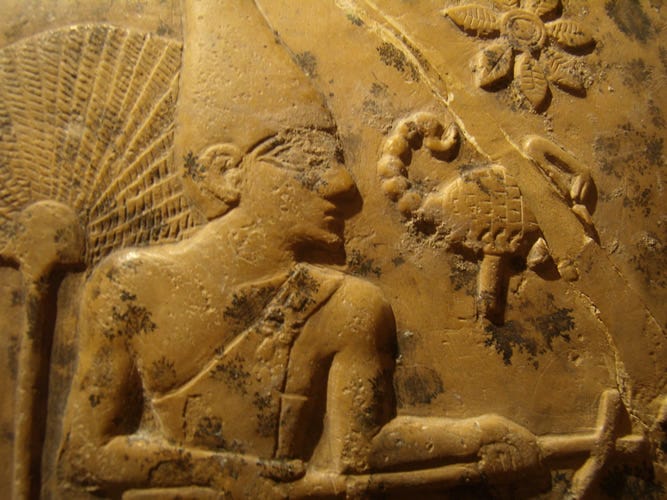
This early urban center was the city of the first Pharaoh. It was the center from which Narmer orchestrated the merging of Upper and Lower Egypt. Its name may mean “the high or distinguished land.” It’s hard to say for certain, but the name Thinis likely reflects the city’s high status.
Thinis’ ruins are likely packed with administrative records, tools of governance, and ritual artifacts. It’s a veritable trove worthy of an Indiana Jones movie.
So the historical significance is tremendous, but what do we actually know of its location?
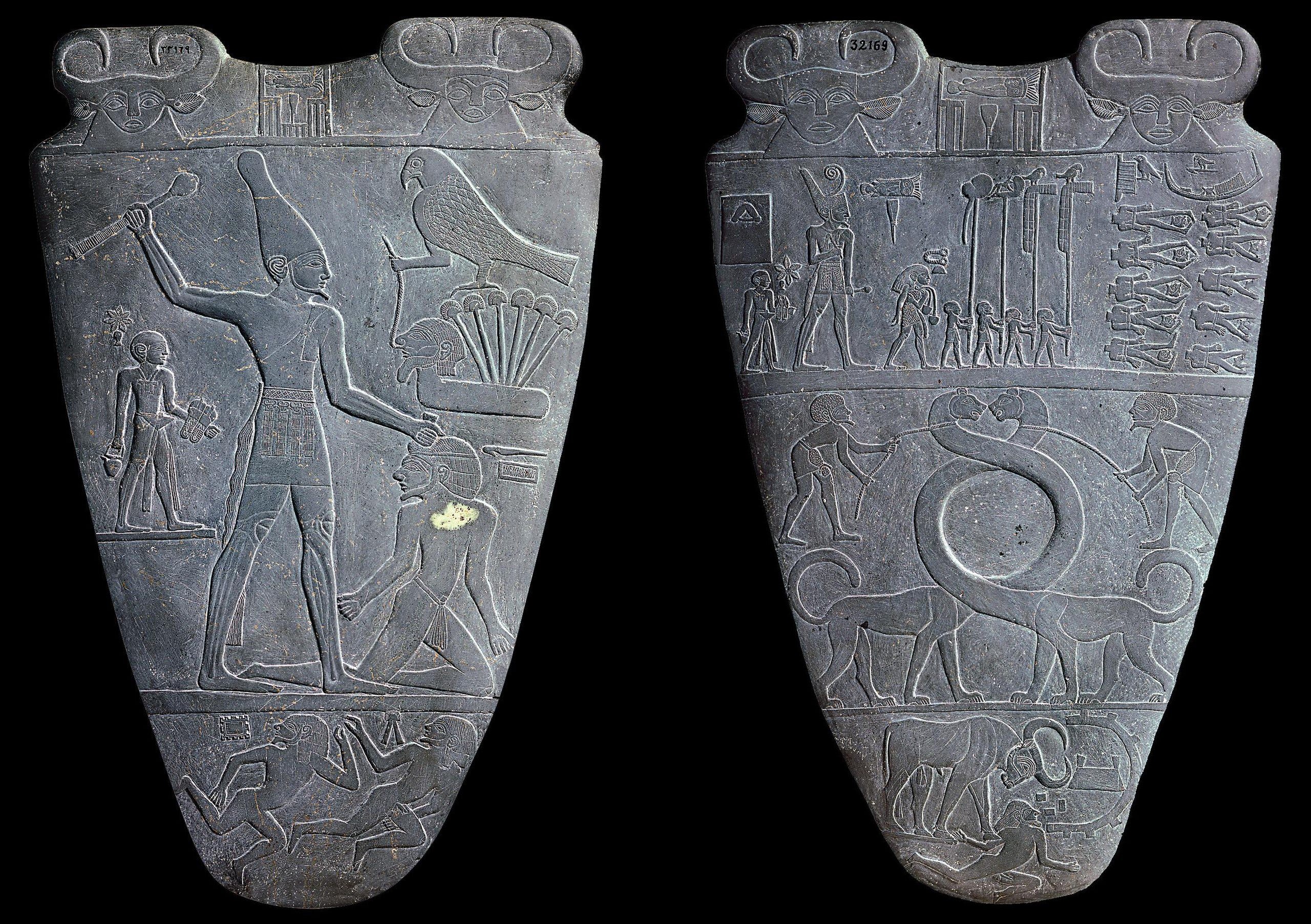
We know about Thinis from ancient Egyptian inscriptions and the writings of several ancients, including the Egyptian historian Manetho.
Writing during the early 3rd century BC, Manetho tells us that Thinis was the home of unified Egypt’s first rulers.
Thinis is believed by some to have been located near the modern-day city of Abydos, in Upper Egypt. Excavations in this area have been ongoing for years, though no definitive city ruins have been uncovered.
But while no direct physical evidence of Thinis has been found, many important early Egyptian artifacts — such as pottery and ceremonial objects — have been discovered at and around Abydos, suggesting an ancient population center of considerable size in the area.
Archeologists believe the city was a major administration center of the early kingdom. A city of perhaps 10,000 people at its peak.
Researchers suspect Thinis could be buried beneath later settlements or may have been destroyed by natural events like flooding or shifting river channels. Some believe it might be under the modern-day city of Girga.
Here’s the crazy part.
Roughly a century ago, ruins were visible near the edges of Girga, but they were either destroyed or people built over them, according to NYU archeologist Matthew Adams.
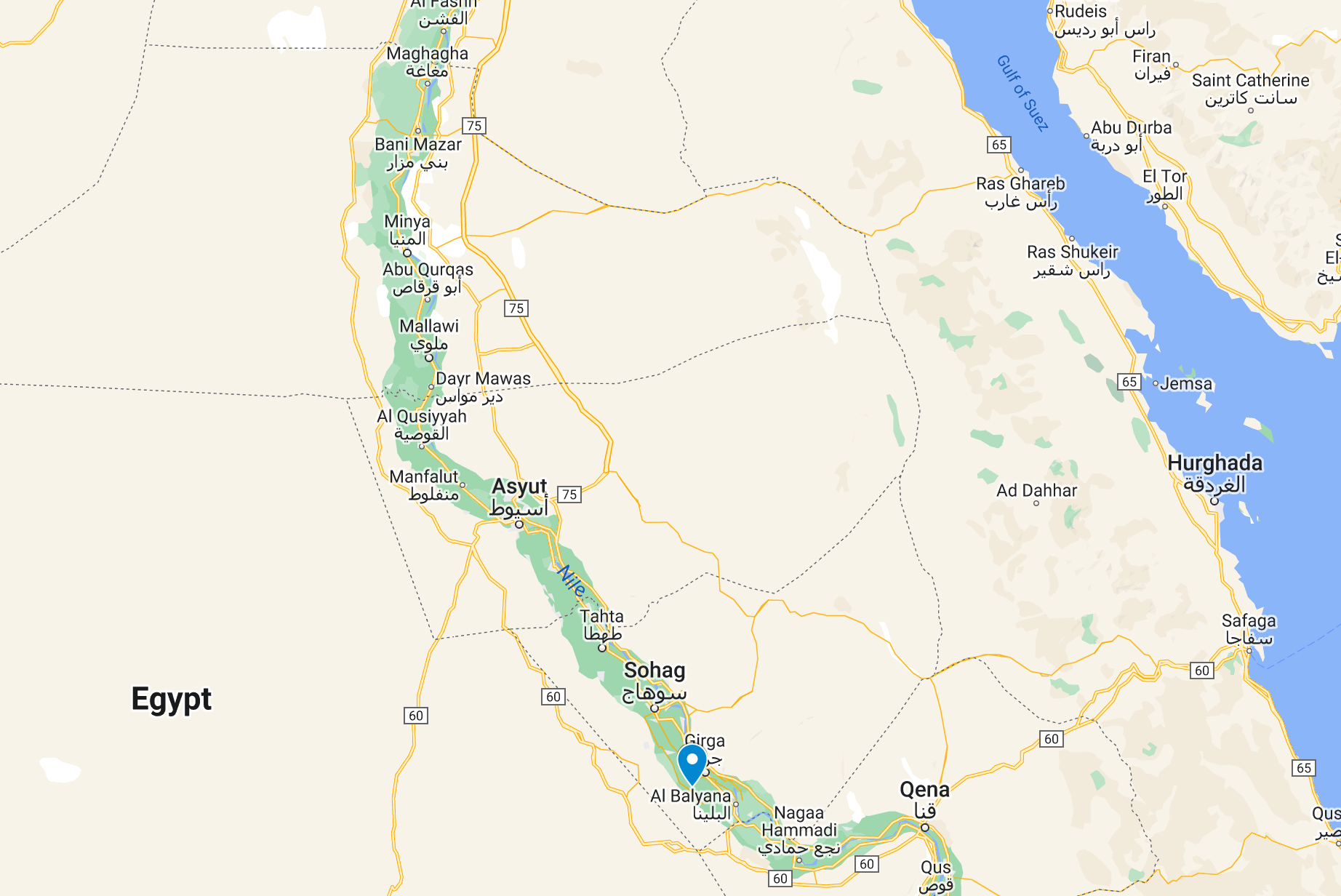
Besides Girga, a couple other locations have been proposed for Thinis:
El-Birba — John Gardner Wilkinson, a 19th century Egyptologist proposed this modern village as the site of Thinis due to its proximity to Abydos and El-Birba’s meaning, “The Temple.” Georges Émile Jules Daressy pointed to the mud-brick ruins there, a statue of Ramses II, and a stone falcon linked to Onuris (Thinis’ patron god) and its strategic location on the Kharga Oasis trade route.
El-Tina — Heinrich Karl Brugsch suggested this as a possible site for Thinis due to the phonetic similarity to the coptic "Tin" (Thinis’ name). But the name "El-Tina" is a common Egyptian toponym unrelated to antiquity and there’s no physical evidence for this claim.
But all hope of finding the lost city isn’t lost:
Satellite imagery and ground penetrating radar (GPR) are being used to map the subsurface in the Abydos region to locate potential undiscovered sites. These methods could reveal hidden foundations, walls, or other structures from the lost capital.
Scholars are also revisiting texts and inscriptions that mention Thinis, looking for more precise clues about its exact location.
The discovery of Thinis could help transform fragmented myths into a concrete origin story. Yet while Ur’s ziggurats and Teotihuacan’s grid layout reveal how those early cities centralized power, Thinis remains a ghost, known only through cryptic inscriptions like the Palermo Stone (c. 2400 BCE), which lists Thinite kings, and Manetho’s Aegyptiaca.
Unearthing Thinis’ workshops, tax records, or administrative seals (like those found at Abydos, its proposed necropolis) could decode how Egypt’s founders engineered unity from chaos. Did they rely on grain monopolies, like Mesopotamian city-states? Or religious propaganda, as the Pyramid Texts suggest?
Unlike isolated tombs or temples, Thinis’ urban footprint would expose the machinery of a nascent kingdom: trade routes, legal codes, military strength, and the logistics of feeding thousands.
Thinis is the missing first chapter of one of the world’s most important ancient civilizations.