

The big myth about the Fall of Rome — what really happened
Rome's greatly exaggerated 'fall' was an inside job.

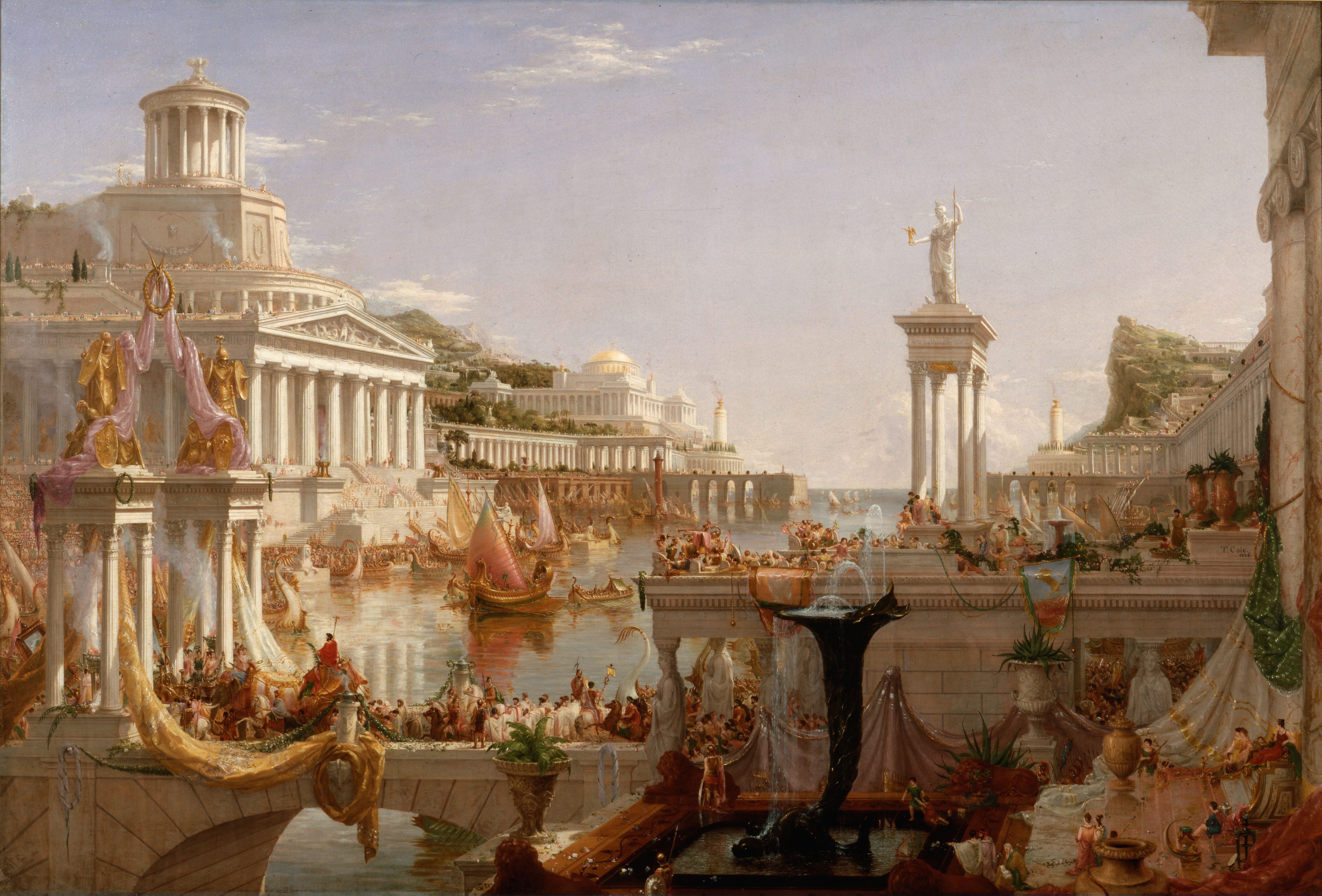
Everyone loves to talk about the collapse of civilizations.
Pundits and politicians often point to the Fall of Rome as a cautionary tale, drawing parallels to whatever crisis dominates today. Immigration, military overreach, moral decay — Rome supposedly proves the point.
But they're missing something crucial: The Roman Empire didn't collapse in AD 476 — not by a long shot. It adapted and transformed.
Let's shatter some myths about the year Rome supposedly "fell."
‘Barbarian Invaders’
The "barbarians" who supposedly invaded Rome had been part of the empire for generations. When Rome faced mounting pressure from Attila's Huns in the 370s, they invited entire Gothic tribes to settle along the Danube River as defensive allies. Germanic commanders like Arbogast and Bauto even rose to become Roman consuls in the late 4th century.
Even the Vandals — whose name is now shorthand for "destroyers" — only entered Roman territory because a Roman general recruited them for a political campaign. By the late empire, these "foreigners" commanded Rome's armies and shaped imperial policy. The empire's last great military leader was Stilicho, the son of a Vandal father and Roman mother.
Capital Importance
The city of Rome itself had lost significance long before 476.
The empire's power center shifted to Constantinople in AD 330, while Ravenna had served as the western empire’s capital since AD 402.
When Odoacer, a Scirian commander, deposed the last Western emperor, Romulus Augustulus, in 476, he didn't abolish Roman government — he worked to preserve it. He acknowledged Eastern Emperor Zeno's authority and maintained Roman administrative systems.
Zeno even granted Odoacer the title of patrician. He was grateful for the stability Odoacer brought to Italy. This "barbarian" ruler minted coins with Zeno's image and maintained the Roman Senate.
For ordinary citizens across the Mediterranean, life continued largely unchanged. Roman law still governed. Trade networks still functioned. The Eastern Roman Empire — which many call Byzantine — would thrive for another millennium.
What’s really telling is how Cassiodorus, writing under the Ostrogoth King of Italy Theoderic the Great (r. 471 – 526), described the new order:
"A Roman in toga, [Theoderic] rules both Romans and Goths with equal justice. ... He has restored what was destroyed of old and preserved what was restored."
This wasn't a lament for a fallen empire, but praise for its successful transformation under new leadership.
Adaptation vs. Collapse
The real story isn't about collapse. It's about adaptation.
Rome's greatest strength wasn't its legions or monuments, but its ability to absorb and integrate neighbors and former enemies . What gets oversimiplified as a catastrophic invasion was a much more complex transformation.
The "Romans" of the 5th century were already a blend of Italian, Greek, Germanic, and other Mediterranean peoples.
So the next time someone invokes "the Fall of Rome" to forecast doom, remember: They're missing the point by about a thousand years.
The empire didn't die in a fiery collapse. It transformed, adapted, and would live on for another 1,000 years, until Constantinople's fall to the Ottoman Sultan Mehmed II in 1453. That, on the other hand, was a truly explosive downfall.
This isn’t just ancient history — it's a lesson in how civilizations actually work. They don't simply rise and fall. They evolve, merge, and reinvent themselves.
Sometimes what looks like an ending is just change in disguise.